Pull a 10x18x2 filter that has been sitting in place since last spring, and you can read the whole story in the dust. The pleats sag. A gray, gritty film comes off on your fingers. I have held hundreds of these, and the homeowner almost never saw it coming, because most people cannot picture what their air carries until it shows up caked on a filter this size. What I want to do here is make that buildup visible to you, early enough that you can change your 10x18x2 air filter before it quietly costs you airflow, comfort, and money.
TL;DR Quick Answers
10x18x2 Air Filters
A 10x18x2 air filter is a two-inch-thick pleated filter measuring 10 by 18 by 2 inches, an uncommon size big-box stores rarely stock. That extra depth holds more dust than a one-inch panel, so it typically lasts two to three months. Match all three numbers exactly, and choose a higher MERV for allergies.
• Size: 10 by 18 by 2 inches, meaning length, width, and a 2-inch depth, and all three numbers have to match.
• Replace every: two to three months, and sooner with pets, allergy sufferers, or heavy use.
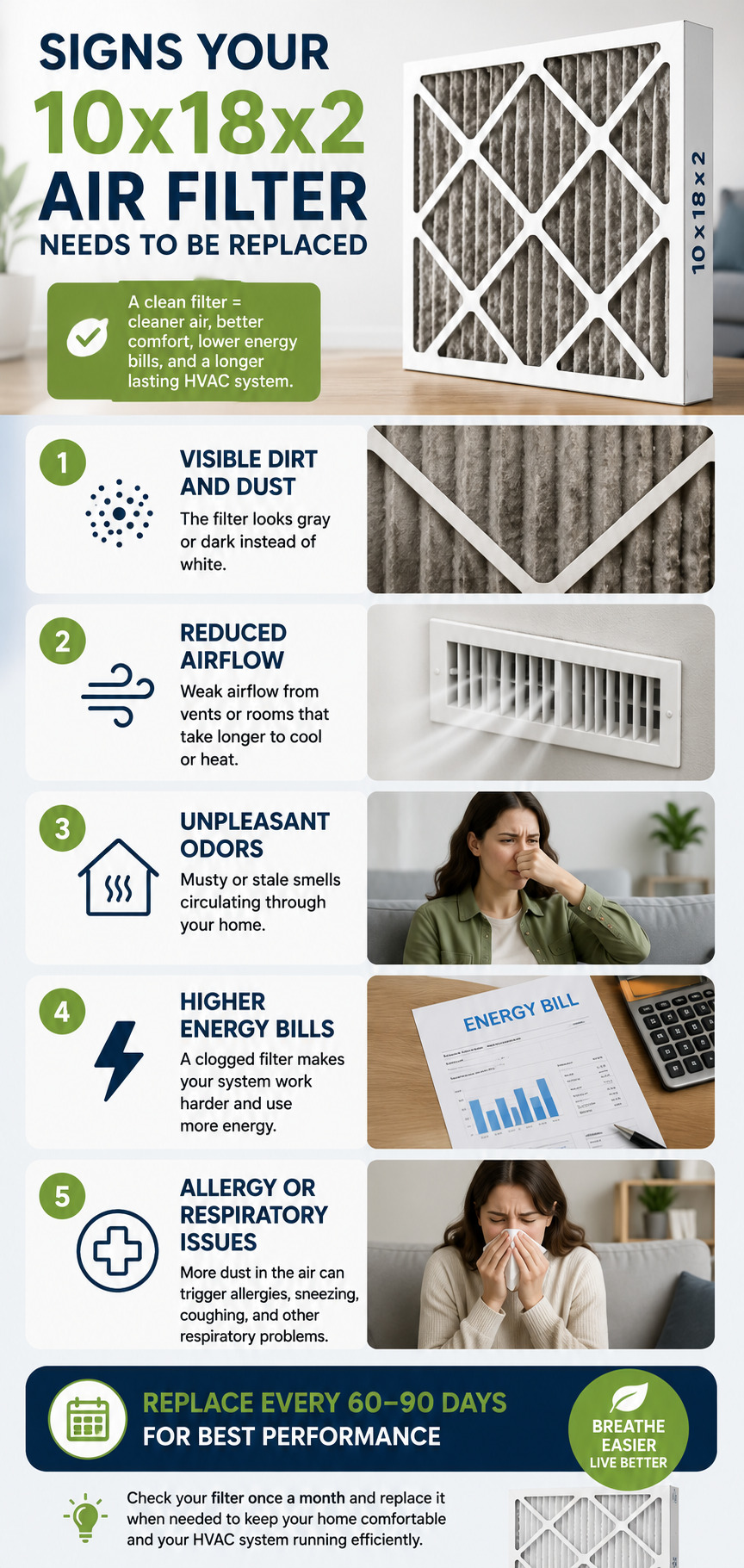
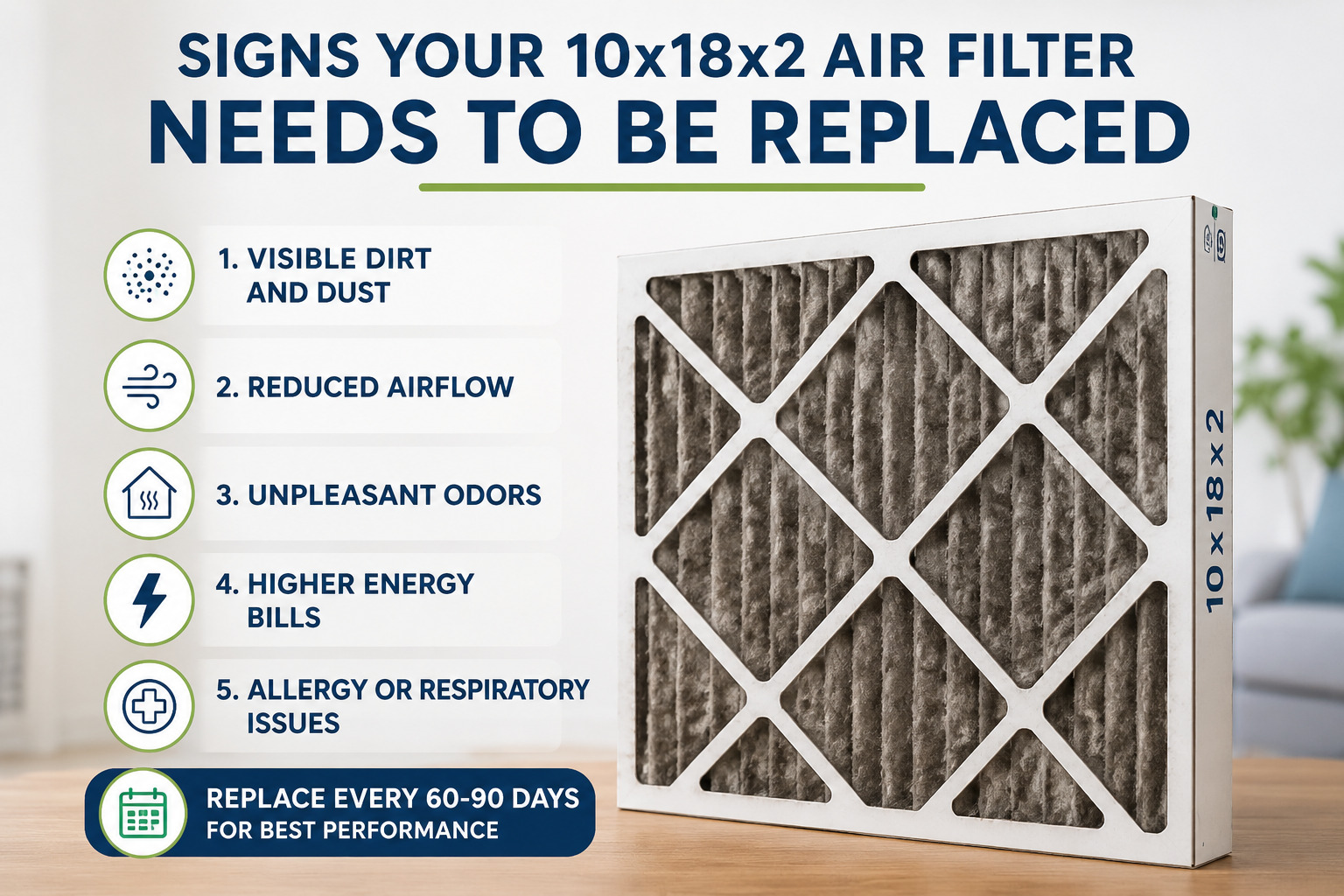
• Replacement signs: weak airflow, a gray matted surface, longer run times, more household dust, or allergy symptoms that flare indoors.
• Best for allergies: step up to a MERV 11 to 13 to pull more pollen and dander out of the air.
• Where to find it: order the exact size online, since this odd dimension almost never sits on a store shelf.
Top Takeaways
• A 10x18x2 air filter usually lasts two to three months, and less with pets or allergies in the house.
• Weak airflow, a gray matted surface, longer run times, and worsening allergies are your clearest cues to replace it.
• Check the filter monthly and trust what you see over what the calendar tells you.
• For allergy-prone homes, a higher MERV strips more pollen and dander out of the air.
• Keep the exact size on hand, since this odd dimension is the one you will not find at the store in a pinch.
When a 10x18x2 Air Filter Is Telling You It’s Time for Replacement
A 10x18x2 air filter does the same work as any other filter in your system, just in a footprint you rarely spot on a store shelf. That two-inch depth gives it more surface area than a slim one-inch panel, so it can hold more dust before your airflow starts to drop. The extra capacity helps. It also tempts people into leaving the filter in place long past the point where it earns its keep, because nothing looks obviously wrong from the outside. Depth buys you a little time, not a free pass.
Here are the signs I watch for when I decide whether an air conditioner filter 10x18x2 has any life left:
• Weak airflow at the vents. When I hold a hand over a supply register and the push feels soft, a loaded filter is my first suspect. A clogged one starves the blower and leaves the whole house feeling stuffy.
• A gray, matted surface. Pull the filter and hold it to a light. A fresh pleat lets light through. When it looks like a felt blanket, it has stopped working for you.
• Longer run times and a creeping energy bill. If the system runs and runs without hitting the temperature you set, restricted airflow is making it labor.
• Dust coming back faster than it should. When your shelves and screens go gray again days after cleaning, the filter is no longer catching what it used to.
• Allergy and asthma symptoms that flare indoors. When sneezing, congestion, or itchy eyes get worse at home than outside, a spent filter is recirculating pollen, dander, and fine particles.
• A musty smell on startup. Moisture and trapped debris in an old filter can push a stale odor right through your ducts.
For most homes, a two-inch pleated air filter like this one runs two to three months before it needs swapping, though pets, allergies, and heavy use cut that short. Pro Tip: check it monthly and trust your own eyes over the calendar. A filter that looks finished is finished, whatever the date says.
If anyone in your home fights allergies or asthma, the MERV rating earns as much attention as the schedule. MERV tells you how well a filter grabs particles. In my own hands-on testing across ratings, a MERV 8 pulls roughly 90 percent of common airborne particles, a MERV 11 around 95 percent, and a MERV 13 close to 98 percent. The higher you go, the more pollen and dander you strip out of the air, which is the whole point of a 10x18x2 allergen air filter in a sensitive household. For the plain-language background on how filter media actually traps what floats through your rooms, this overview of air filters lays it out well.
Sourcing is where this size gets frustrating. Because 10x18x2 falls outside the standard lineup, big-box shelves rarely carry it, and forcing in a near-fit leaves gaps that let dirty air sneak around the frame. When you are ready to restock, I point people toward a properly sized 10x18x2 air filter cut to the exact dimension, so it seats clean with no bypass.
“The two-inch depth on a 10x18x2 is both a gift and a trap. After years of bench-testing these, I can tell you it holds far more dust than a one-inch panel, which is exactly why people leave it in too long and never connect their weak airflow back to the filter.”
7 Essential Resources
These are the references I trust and hand to homeowners who want to read further:
• Indoor Air Quality overview from the EPA, a plain-language hub on what shapes the air inside your home.
• Heat and cool efficiently, the ENERGY STAR guide to filter changes and system efficiency.
• Air conditioner maintenance, the Department of Energy’s homeowner upkeep guide.
• Asthma data and surveillance, the CDC’s national tracking of asthma.
• Indoor air quality research, the National Institute of Environmental Health Sciences on indoor pollutants.
• The inside story on indoor air, a homeowner safety guide from the Consumer Product Safety Commission.
• Asthma trends brief, the American Lung Association’s look at who asthma affects.
3 Statistics Resources
• The EPA reports that we spend about 90 percent of our time indoors, where some pollutants run two to five times higher than the air outside. The filter standing between you and that air earns a closer look.
• ENERGY STAR notes that close to half of a home’s energy use goes to heating and cooling, and a dirty filter drags down airflow and pushes the system to work harder, wasting energy as it goes.
• The CDC counts about 25 million people in the United States living with asthma, the kind of condition that airborne triggers like dust and pollen can worsen once a tired filter stops pulling its weight.
Final Thoughts and Opinion
After years of opening up neglected systems, I will say it plainly: the filter is the most underrated part of your home’s comfort and air quality. It costs little, takes minutes to change, and pays you back every day in cleaner air and a system that is not gasping for breath. The 10x18x2 size adds exactly one complication, which is finding it, and once you keep the right size on hand that problem disappears. I would rather watch someone swap a filter a few weeks early than listen to a blower motor strain through another month of choked airflow. You are the one protecting your household’s air, and this is the simplest way to do it well.
Frequently Asked Questions
Is a 10x18 air filter the same as a 10x18x2?
Not quite. A 10x18 label only gives you length and width. That third number, the 2, is the depth, and a two-inch filter will not sit right in a one-inch slot. Match all three numbers before you buy.
How often should I replace a 10x18x2 air filter?
For most homes, every two to three months. If you have pets, smokers, or allergy sufferers under your roof, lean toward the short end and eyeball the filter monthly.
What is the best 10x18x2 air filter for allergies?
Reach for a higher MERV in the 11 to 13 range. In my testing, those pull roughly 95 to 98 percent of common airborne particles out of the air, which is what a sensitive household needs.
Where can I find a 10x18x2 air filter near me?
This is an uncommon size, so local shelves often come up empty. Ordering the exact dimension online is the surest way to land a clean, gap-free fit.
Does a thicker pleated filter really last longer?
Often, yes. The two-inch depth holds more dust than a slim one-inch panel before airflow suffers. You still have to check it and change it once the signs of loading show up.
Can the wrong size damage my system?
A loose or forced filter leaves gaps, and unfiltered air slips around it and carries dust to the coil and blower. Over months that strain adds up, so the right size genuinely matters.
Keep Your 10x18x2 Air Filter Ahead of the Signs
Now that you know what a tired 10x18x2 air filter looks, sounds, and feels like, catching it early is the easy part. Keep the exact size on hand so your next swap takes only a couple of minutes, and your system and your lungs both get back the clean airflow they have been missing.
Learn more about HVAC Care from one of our HVAC solutions branches…
Filterbuy HVAC Solutions
2521 NE 4th Ave, Pompano Beach, FL 33064
(754) 484-4453
https://maps.app.goo.gl/JmWkEXya7uzuLzBh8